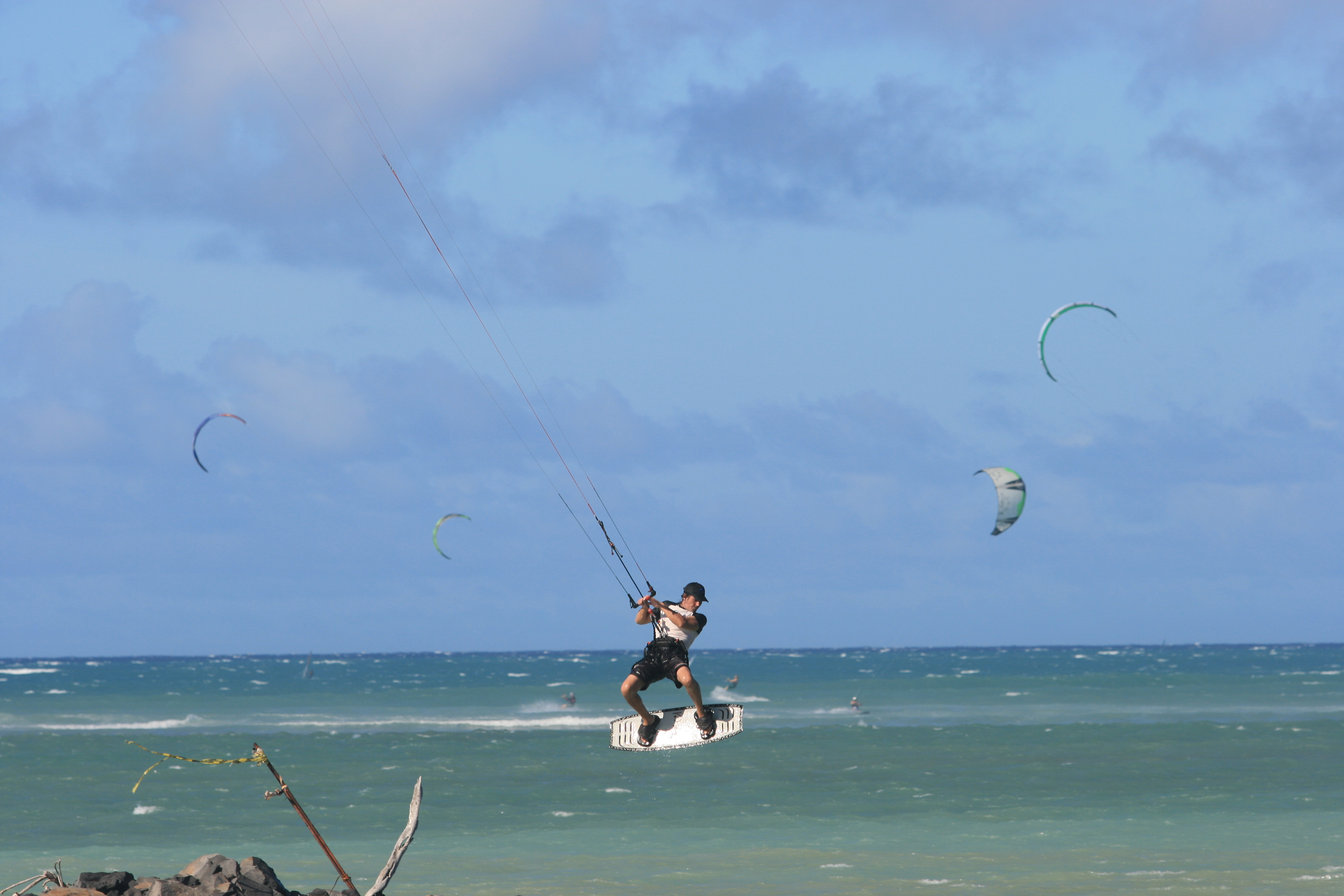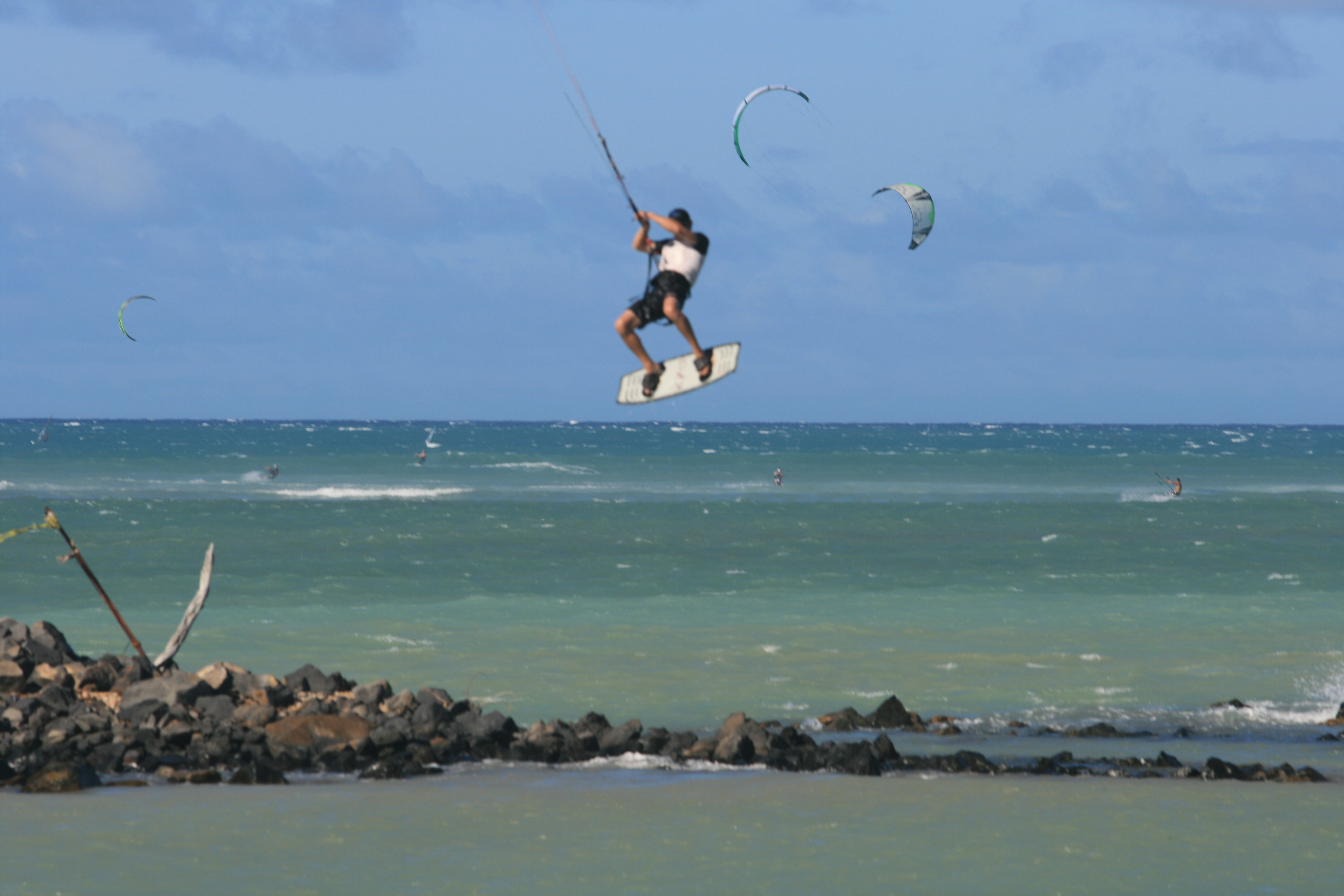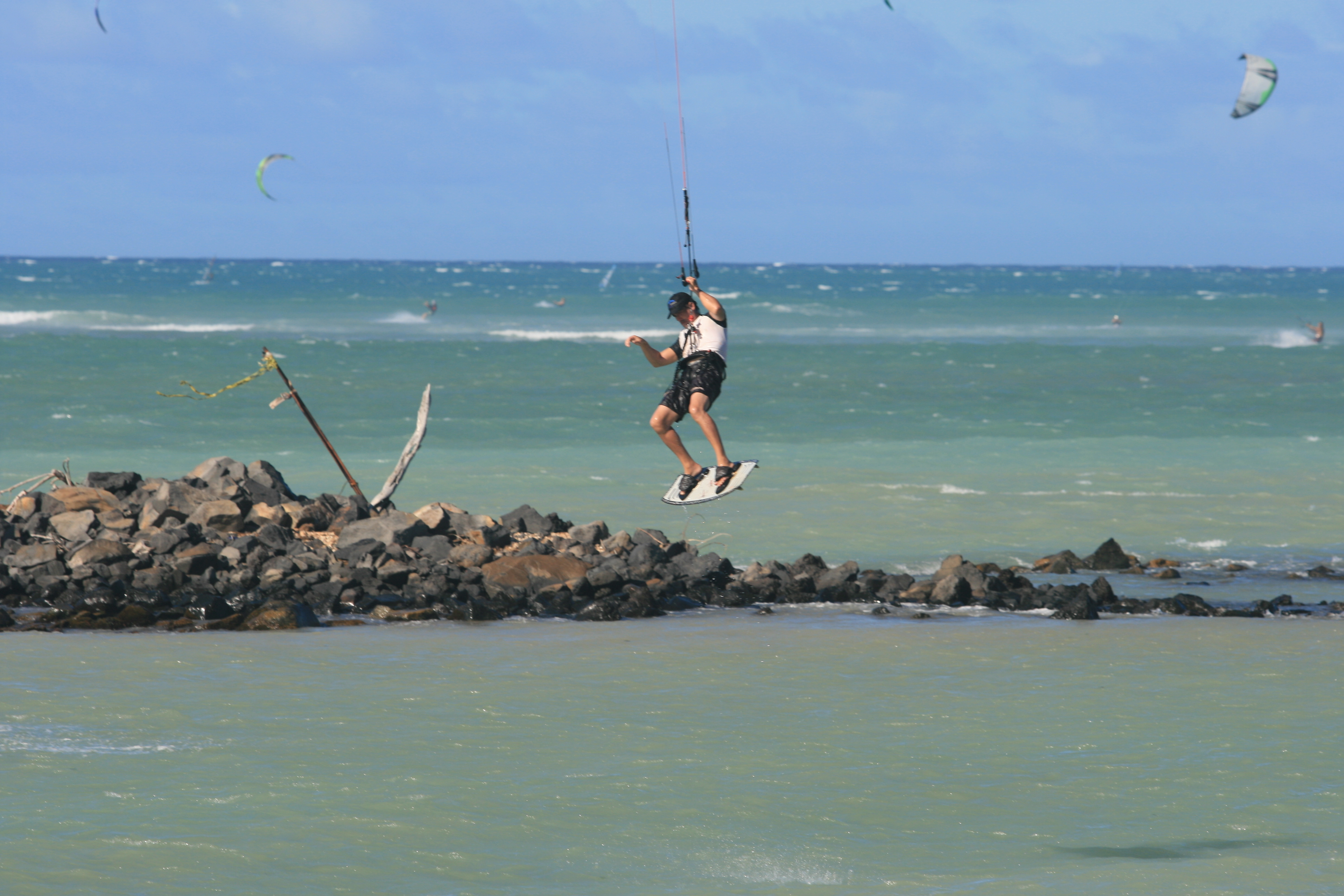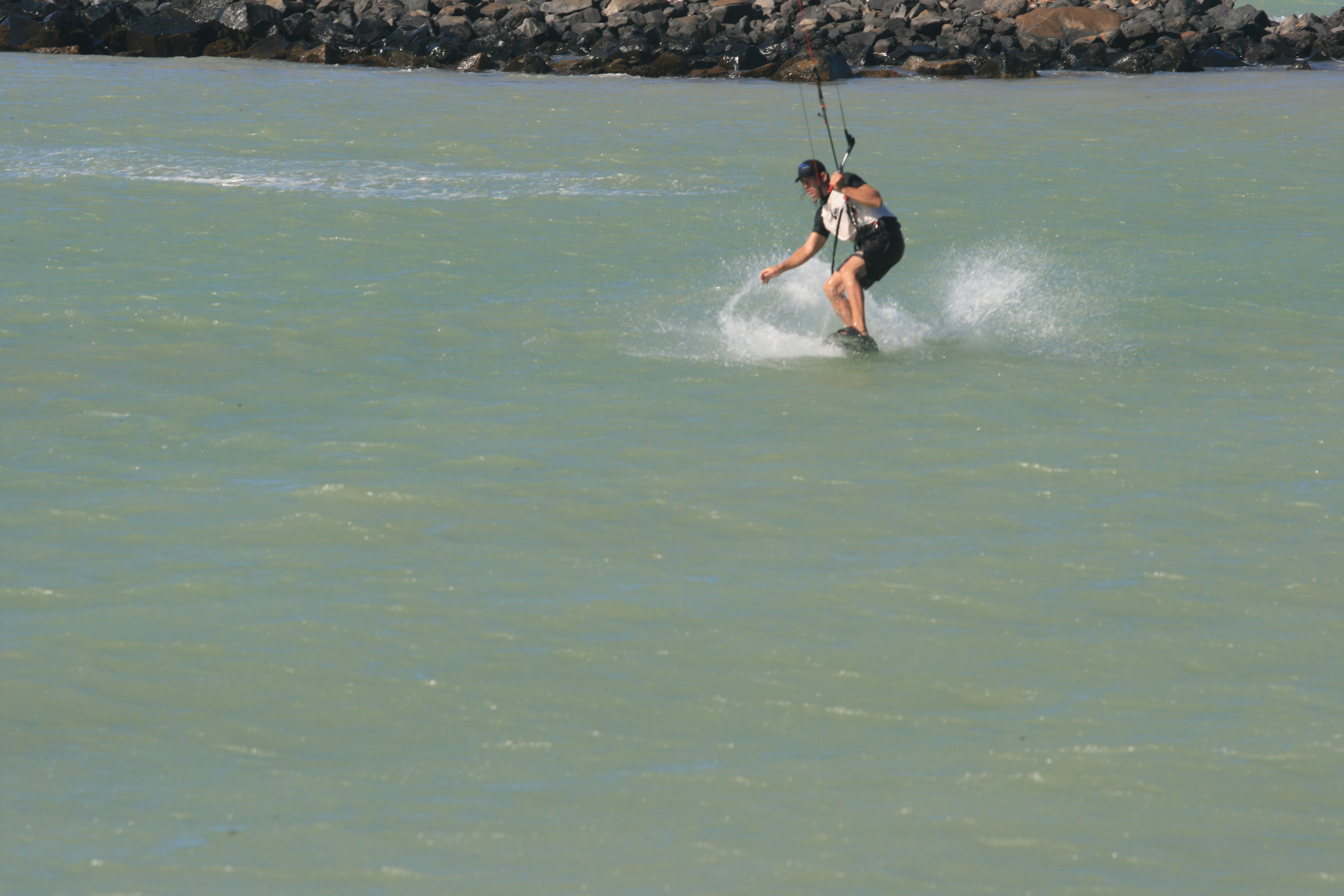
Kite Beach – a good day to fly

Taking off

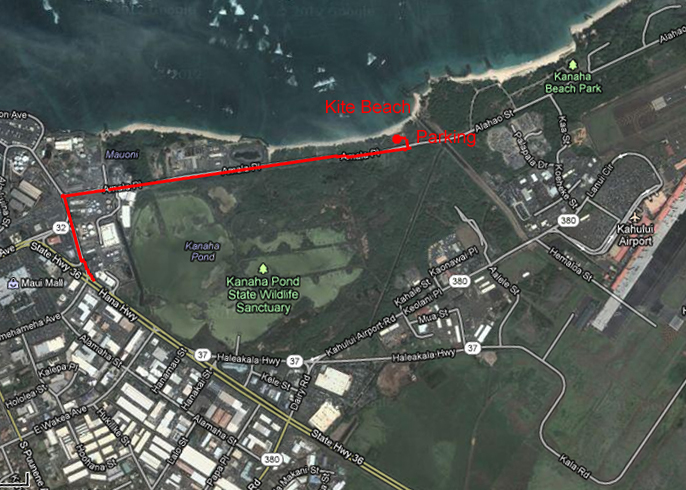
To get to Kite Beach, located on Maui’s north shore in Kahului, you drive through an industrial area and past the waste water treatment plant. It’s not your average tourist destination. (See map below.)

When there’s a steady wind, that’s where the kite boarders go. On a good day the sky is full of kites. We’re not talking flying kids kites here; these kites will fly you.

Flying high

It’s a big beach. Beginners, and those who are more tentative, work their skills at the west end of the beach. If you’re ambitious you can even take a lesson there.

Those who know what they’re doing board, and fly, at the east end of the beach – right in front of the small dirt parking lot.

Coming in for landing

The protocol for kite boarders is to travel in a big clockwise circle; sometimes coming close to shore and turning back way out at sea. This keeps lines from crossing. Since lots of boarders are skimming across the waves at speeds in excess of 20 mph, an abrupt stop would not be good.

The best kite boarders catch air. BIG AIR. The fellow in these pictures probably reached 20 feet vertical and flew 100 to 200 feet.

Touchdown

Then he stuck it. He, and several others that morning, did it over and over again.

It’s great entertainment. The best tricks are done close to shore.

To get to Kite Beach from the south, head toward the airport on Dairy Road. Turn towards the West Maui Mountains on the Hana Highway then follow the map below.

Map to Kite Beach

Haleakala – The Night Sky

The Milky Way above Mount Haleakala. Photo by Wally Pacholka as seen in mauimagazine.net

It’s said that a large percentage of the American population has never seen the Milky Way – especially young people. It’s just too bright at night in the urban/suburban areas where they live. Of all the generations of mankind that have ever lived, this is a recent, and somewhat sad, phenonmenon.

Fotunately, this is not a problem on Maui. Go anywhere on the island on a clear night where there are no bright lights shining in your eyes and, in the summer,  you can see the milky river of light of the Sagittarius arm of our spiral galaxy slicing across the sky or, in winter, the somewhat dimmer Perseus arm. (In the northern hemisphere in summer, we look toward the center of our galaxy; in winter in the opposite direction toward deep space. That’s why the Milky Way looks brighter in summer.)

In the photo above (which I wish I could say I took), Jupiter shines brightly below the arc of the galaxy disk. This is a time elapse photograph, so the Milky Way won’t look as bright to the naked eye; but it still will impress.

The best (and coldest) views of the stars on Maui are from the top of Mount Haleakala. There are serious research telescopes on top of the mountian – not like the world-class telescopes of Mauna Kea on the Big Island, but impressive nontheless. You can’t look through the big scopes, but you can look with your naked eye or, if you have them, binoculars or a small telescope. Even small binoculars will reveal a wonder of stars and (if you know where to look or are just plain lucky) other wonders of the night sky. Even people with very ordinary night vision can see the Andromeda Galaxy with their naked eye,  2.5 million light years away! With binoculars, other galaxies, ghostly nebula,  the moons of Jupiter, and brilliant star clusters await those with patience and a little knowledge or luck.

If you’re out on a clear dark night on Maui, stop somewhere dark and look up. You won’t be disappointed.

See our other posts on Haleakala titled Haleakala – The House of the SunHaleakala – Come Prepared, and Haleakala – Into the Crater.

Haleakala – Into the Crater (The Sliding Sands Trail)

Horse back riders on the Sliding Sands Trail

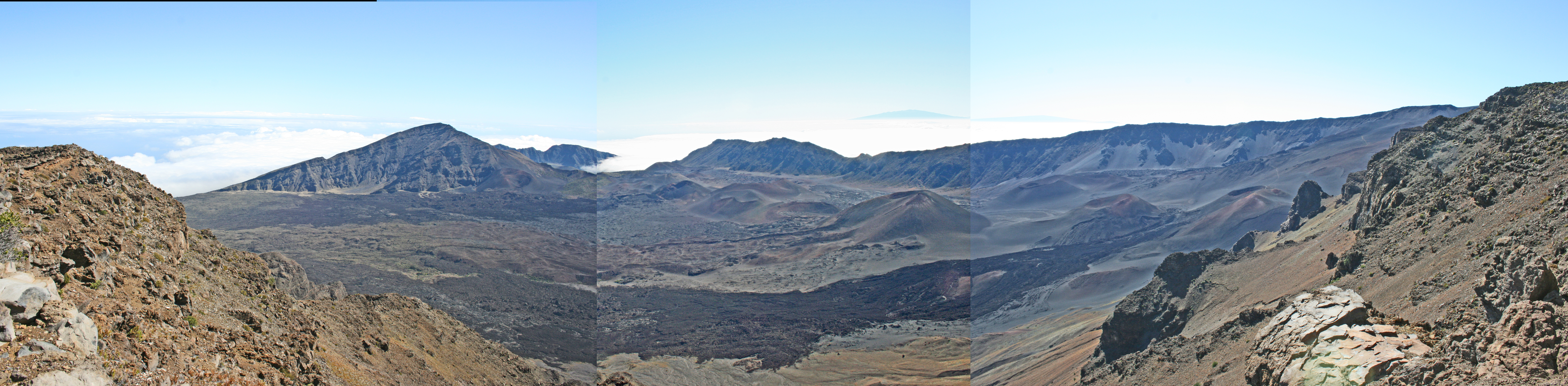
There are several great trails into the Haleakala erosion crater. If you click on the picture to the right you can see a line of horses and riders ascending the Sliding Sands Trail. It’s only when you see something like this that you get an idea of the scale of the place.

While this is all explained in the Maui trail book in our condo, the trail head is a short walk around the cinder cone on the south side of the parking lot. From the start of the trail it’s 2,500 vertical feet to the crater floor – so the hike down is pretty easy. The hike up is another matter. Depending on your physical condition and how you react to the thinner mountain air, it will take 1.5 to 2.0 times as long to hike out as it takes to hike in. Keep this in mind if you’re hiking later in the day. It gets dark (and cold) fast when the sun goes down. Even in summer it can be chilly in the shadow of the west rim of the crater in the late afternoon.

Haleakala Crater – Photo by Dick Morgan

As you can see from the photos, you are entirely exposed on this trail. Use sunscreen and carry water. We generally hike with a daypack with water, snacks, extra clothing and anything else we might need.

Consider adding a hike to your Haleakala experience. If you come early for the sunrise, you can hike in and out before lunch and then enjoy a meal in the Up Country. Alternatively, if you’re not into starting your day at 2 or 3 AM so you can see the sunrise, you can hike in the afternoon and time your return to see the sunset from the top of the mountain. It’s a whole lot like the sunrise, but without the busloads of tourists and people standing five deep at the best vantage points.

Speaking of sunrise and sunset, did you know that Haleakala means “house of the sun” in Hawaiian? To find out more, click here.

For another great (but harder) hike into the crater, click here to see our blog on the Halemauu Trail.

Haleakala National Park – Come Prepared

There’s lots to do on Mount Haleakala: hiking, biking, horseback riding, star gazing, watching the sunrise (or sunset), camping, birding, or just escaping the heat of the beach for a day.

Haleakala Crater – Photo by Dick Morgan

While you’re there or on the way, you have a good chance of seeing rare plants and rare birds and, at the top, a landscape not unlike the pictures from Mars. There is also a chance you’ll see nothing. If the mountain is shrouded in clouds, wait for another day. If you can see the top from outside our front door at Maui Vista, it’s worth a try. Even so, the weather on Haleakala can change rapidly and the erosion crater can fill with clouds in minutes. On the other hand, it can change for the better just as fast.

If you go, be prepared. According to the National Park Service, the average temperature at the summit is 17 degrees (Fahrenheit) cooler than at sea level. And that’s an average. It can be very cold especially at night and in the shadows. If the wind is blowing and you don’t have layers of clothing, you will not stay long.

In addition to the drop of temperature, several other things happen at 10,000 feet. First, many people feel light-headed due to the thinner atmosphere. Take it easy until you know how the altitude affects you. The thinner atmoshpere also means the UV rays are even stronger than at sea level. Fortunately you’ll probably be wearing more clothes than your normal beach wear, but remember to bring sunscreen. Finally, if you’re active, you may need more water than usual. There’s precious little water and no food at the summit. If you plan to stay a while, bring your own.

It’s about a two hour drive from Maui Vista to the top of Haleakala over good, but windy roads. It’s a National Park so, if you don’t already have a pass, there is a $10 entrance fee per vehicle. The pass is good for three days and includes the driver and all passengers. There are also things to do and places to eat in the Up Country below the park. (See our posts Kula – a Drive in the (Up) Country and Grandma’s Coffee House in Kula.) Make a day of it!

See our other posts on Mount Haleakala by clicking here and here.

Haleakala – The House of the Sun

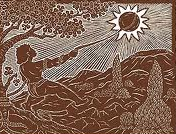
The photo to the right is of a print by Dietrich Varez which hangs on the living room wall of our Maui Vista 2418 condo. It depicts the story of Maui slowing the sun.

Legend has it that Hina, the mother of the demi-god Maui, made kapa cloth from the bark of local trees.  But when she dyed the cloth in the morning the kapa would still be damp in the evening.  “The sun moves too quickly across the sky,” she cried.

In those days, from their Big Island home near Rainbow Falls not far from modern day Hilo, it was clear that the sun rested at night in the crater of Mount Haleakala for part of the year. So, upon hearing his mother’s lament, Maui took his canoe and traveled across the water and, while the sun was resting, climbed the 10,000 foot mountain and looked down on the sleeping sun.

As the sun stretched to begin its day, Maui lassoed it with a rope of twisted coconut fiber and held on tight. Maui demanded the sun move more slowly so his mother could dry her kapa cloth. Bargaining with Maui, the sun promised to slow its journey for half the year and move at its accustomed pace the other half.

Maui released the sun and returned to tell his mother the good news. Delighted, she made a new cape for her son and, thanks to the sun’s slower pace, it dried that very afternoon. Ever since, the warm days of Hawaiian summers have lingered several hours longer than the days we call winter in colder climates.

Thank you Maui!

Catching a Wave at Ho’okipa

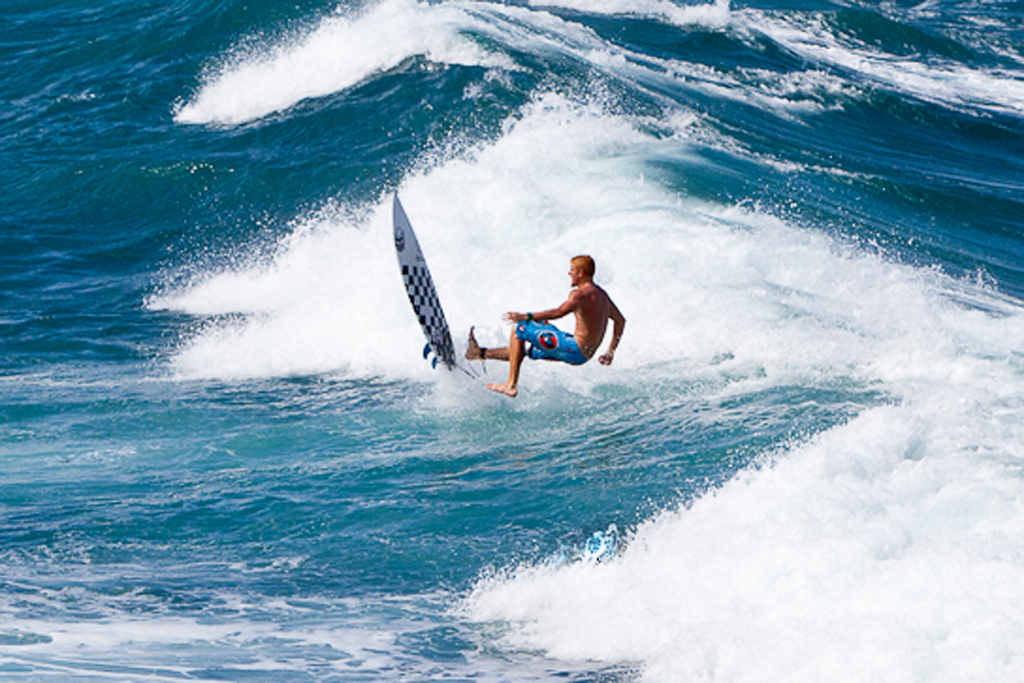
Catching a wave at Ho ‘okipa – Photo by Dick Morgan

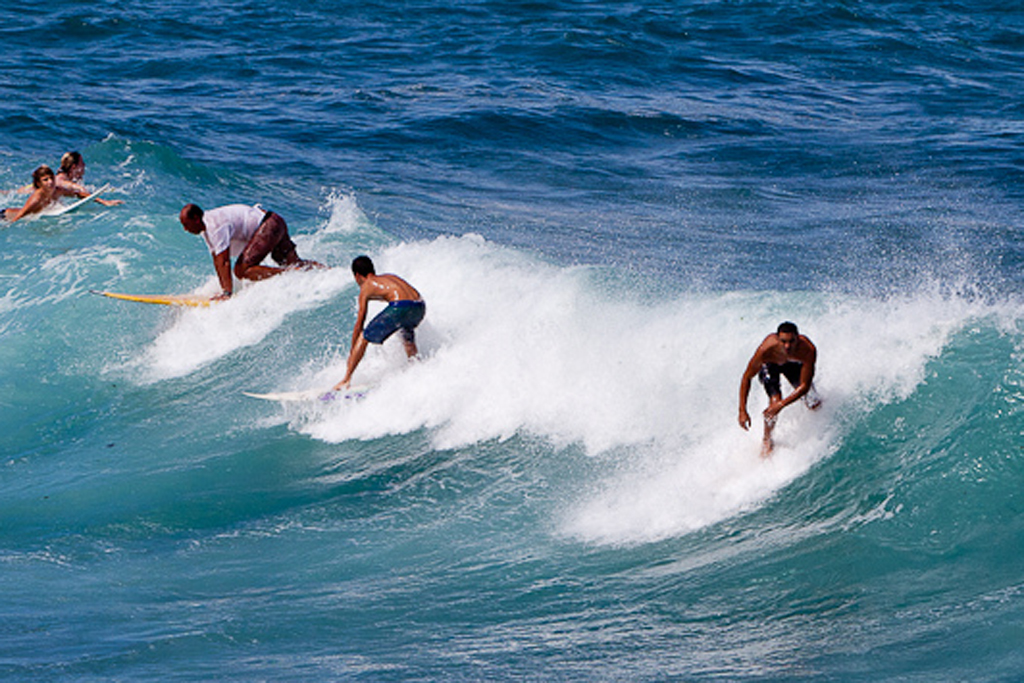
Perhaps the most consistent surfing waves on Maui are at Ho’okipa (pronounced Hō ō key pă) on the north shore about two miles east of the Paia stoplight on the Hana Highway. There’s a great overlook with parking at the east end of the bay. The first two photos in this post were taken from that vantage point.

This is a very popular spot for locals. Spectators are fine, but if you don’t know what you’re doing, stay out of the water.

Oops – Photo by Dick Morgan

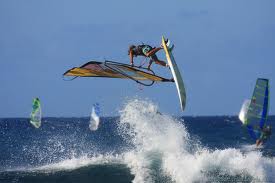
Sometimes when the surf is down the wind is up. In that case, you’ll miss the surfers but catch the windsurfers. Sometimes you’ll see both. This guy was off to a good start but not a great finish.

Catching air

For perhaps obvious reasons, the surfers and windsurfers tend to stay apart. Whenever we’ve been there the surfers were by the eastern overlook where the big rollers are and the windsurfers farther west. There’s a smaller overlook above the area most popular with the windsurfers. If there’s room, you might get a better view from there.

While you’re in the area, catch a bite to eat at one of the restaurants in Paia. So far our blog has reviewed Cafe Mambo (our favorite for island style pub food) and Mama’s Fish House. Look for other Paia restaurant reviews in the future.

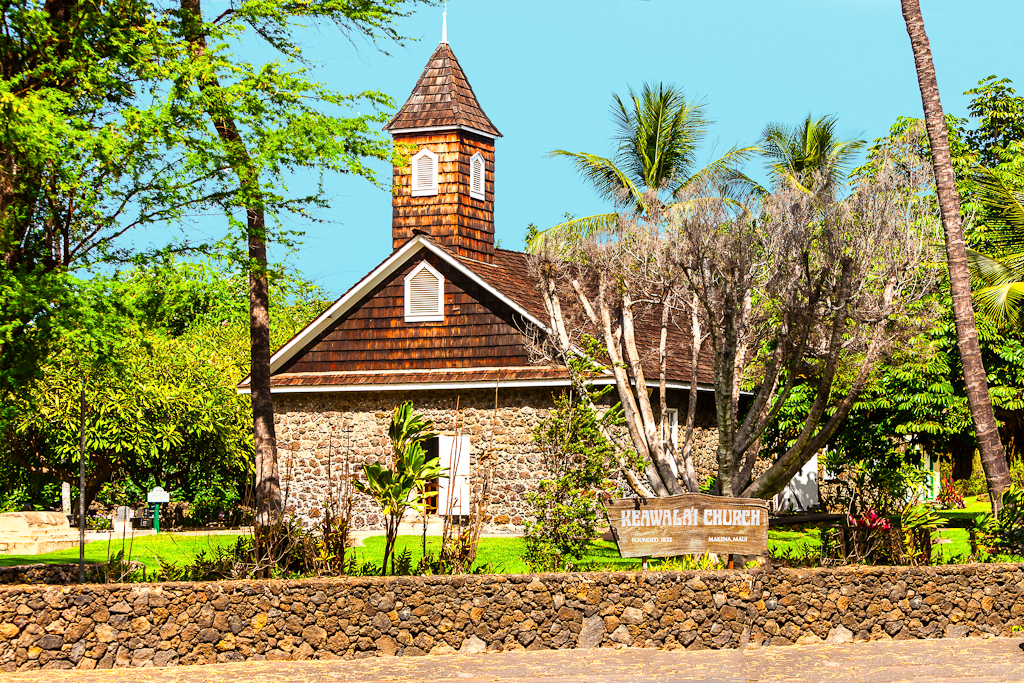
Keawala’i Congregational Church in Makena

Founded in 1832, the Keawala’i Congregational Church is one of the oldest churches on Maui. The lava stone structure that still stands was built in 1855 using a mortar made of coral. It replaced the original house of worship made of pili grass. Over the years the three foot thick walls have been repaired and the wooden roof and bell tower replaced, but the bones of the 1855 church remain.

Sometimes referred to locally as “the old stone church,” the Keawala’i Congregational Church is located on a small sandy cove between Makena Landing and Maluaka Beach about six miles south of Maui Vista. From Highway 31, follow the signs pointing to “Makena Landing” and “Keawala’i Congregational Church.” Turn left as you get to the bottom of the hill. The church is just up the road on your right. You can’t miss it. Park across the street in the Maluaka Beach parking lot and look around.

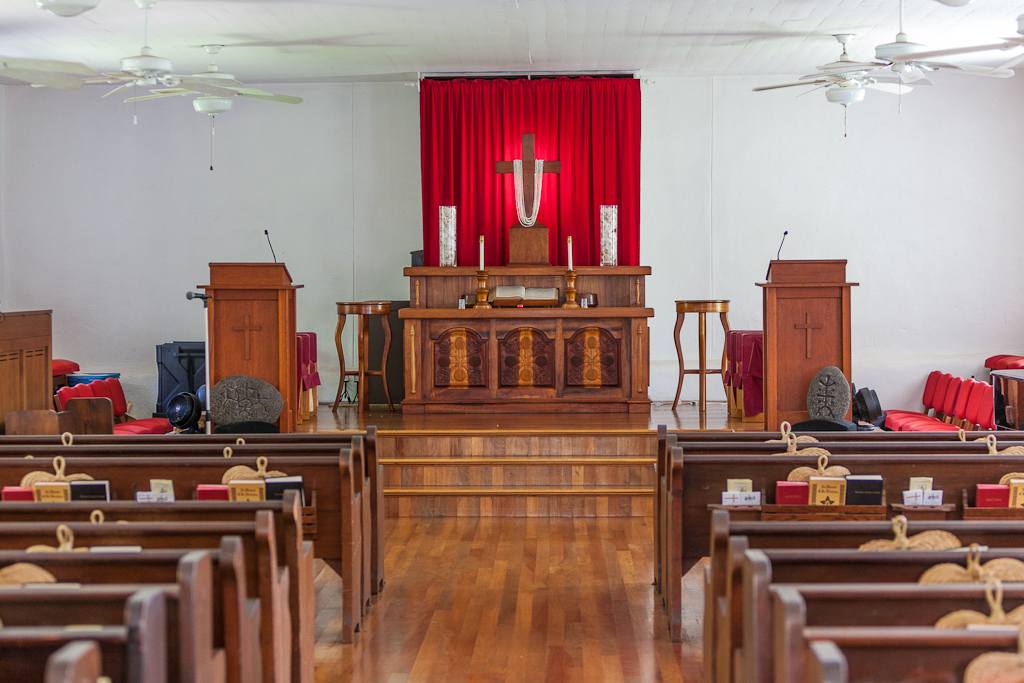
If the doors are open you can look inside at the simple handsome interior. Hymnals are provided in both English and Hawaiian and the church owns an early 19th century bible written in Hawaiian. Two services are held each Sunday – one in Hawaiian.

The son of a friend of ours was married in the Keawala’i Church in 2010. If you’re interested, you don’t have to be a member to arrange for a wedding, reaffirmation of wedding vows, baptism, or funeral/memorial service. Contact the church for details.

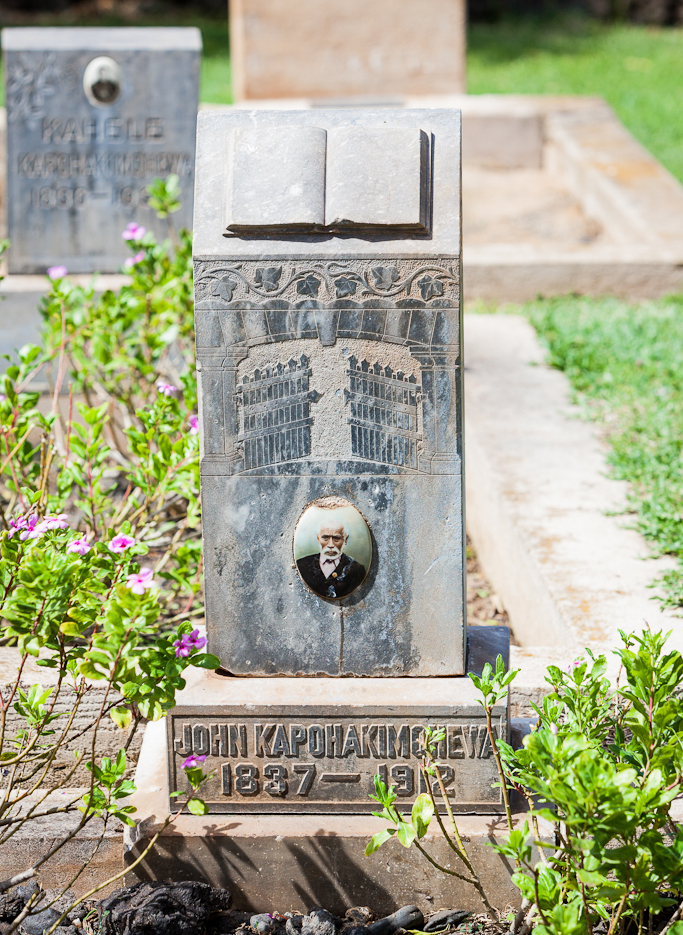
The church’s small graveyard by the sea is worth a visit. It has old and newer headstones.

At the far end of the graveyard is a simple and dignified grave for the remains of a woman from pre-missionary times. Her bones and a comb were found with the remains of a buried canoe when one of the large hotels was constructed in Wailea.

While you’re in the area, enjoy the beaches. Both Makena Landing and Maluaka Beach are great for snorkeling, swimming, and relaxing. Check out our post on Makena Landing to learn about snorkeling with turtles.

End of Season Whale Watching in Maui

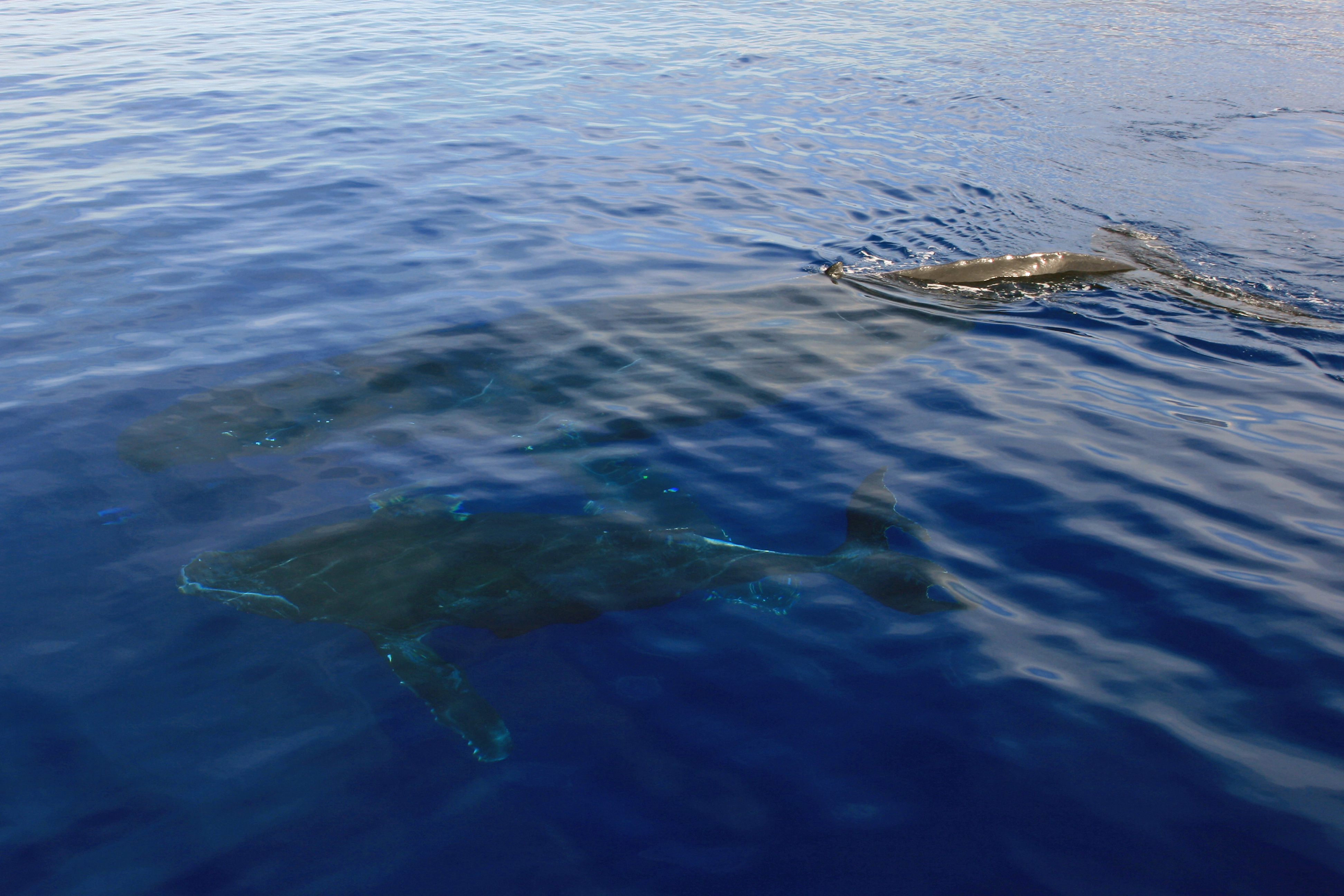
Mother and calf swim next to our boat

From December through March thousands of humpback whales make the warm waters between Maui, Lanai, and Kaho’olawe their home. The first ones usually arrive from their arctic feeding grounds sometime in November and the last stragglers are gone by the end of April. While they’re here they mate, calve and, for months on end, do not eat. (Big exception – the calves who gain 100 pounds or more per day on their mother’s milk!) During much of the time the whales put on great displays clearly visible from the shore and awe inspiring close up. We often take binoculars to the beach to get the best views.

The photos in this post were taken in early April after the most spectacular displays of breaching and fin slapping were over. Nonetheless, we saw lots of whales on a beautiful pristine day.

Coast Guard regulations prohibit boats approaching whales closer than 100 yards, but some whales seem not to have read the regs. When a boat cuts its motor and drifts, a whale or two – like the mother and calf in the picture above – will sometimes come close to investigate. We were told that the mother will usually place herself between the calf and boat so we were lucky to get a picture like this. The calf was literally not more than 20 feet away. (Click on the picture to make it bigger so you can see the detail.)

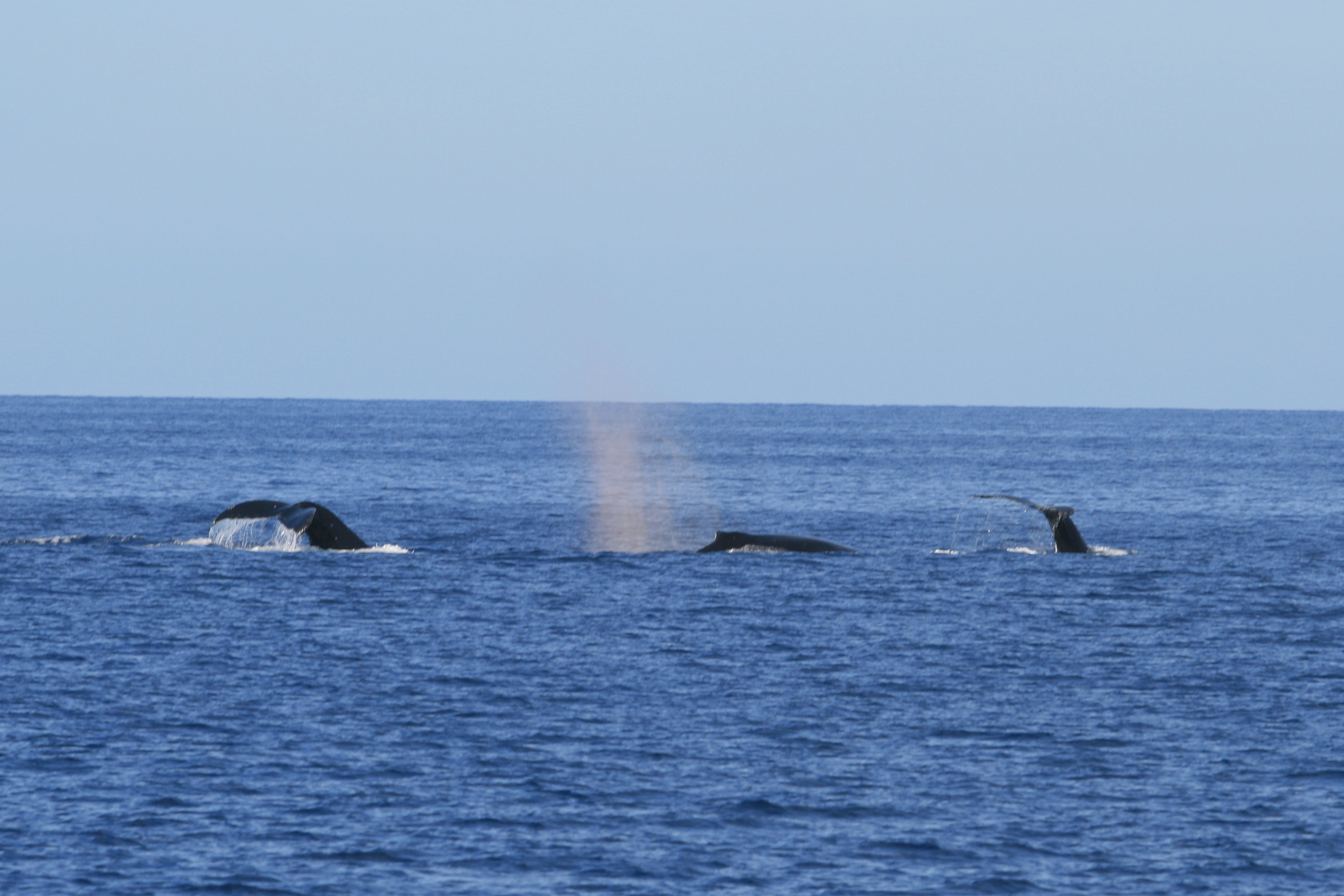
Small pod passing by

There are many whale watching cruises – we took one by the Pacific Whale Foundation. The crew was knowledgable and the trip great fun.

In addition to the highlight of the mother and calf swim-by we saw lots of spouting and tail flukes like this small pod in the photo to the left.

Snorkeling at Molokini

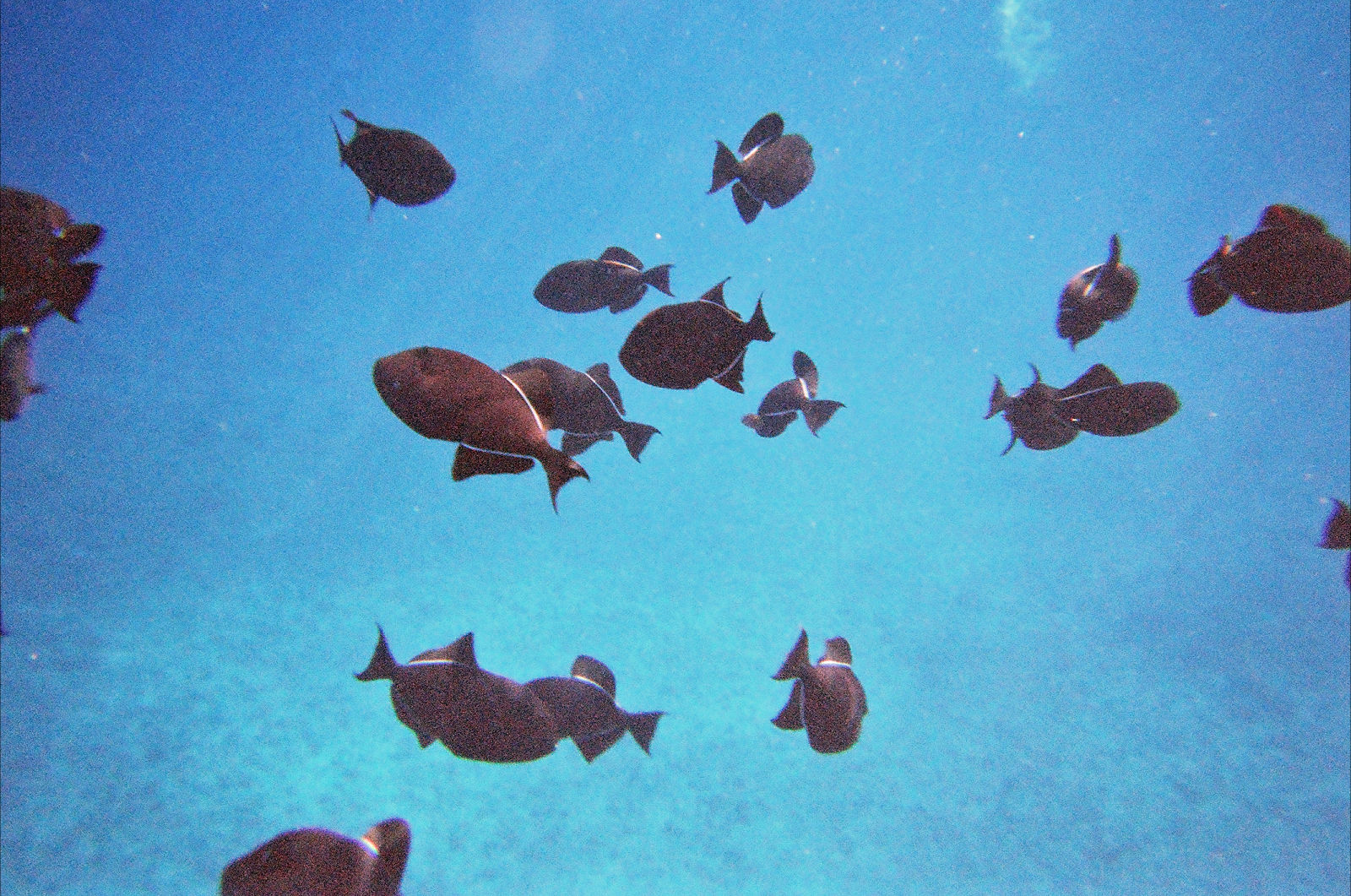
School of fish at Molokini

There are many boats that will take you to Molokini for snorkeling. Some also go to “turtle town” where it’s likely you’ll see a turtle or two. (See our posting on “South Maui Snorkling – Makena Landing” for a no-cost option to swim with turtles.) Some trips to Molokini are longer and some shorter. Some provide food and drinks. Some do snuba at extra cost. (Snuba is sort of like scuba but without the  freedeom of movement and without the air tank on your back.) While we provide free snorkel gear at our condo, all the boats provide their own. Shop around to find the trip which is best for you.

The seas are generally calmer before the wind picks up so go in the morning unless you have no other choice. On a clear day you can see to a depth of 80 feet or more so the ideal time to go is a calm morning with no, or few, clouds. Of course, you usually have to make reservations in advance, so the conditions may not always be perfect.

Snorkel boats leave from Maalaea Bay – about a 20 minute drive north of Maui Vista. (They also leave from Lahaina, but don’t bother.) Take the road toward Lahaina and watch for the signs to Maalaea Bay. Allow time for parking and walking to your boat.

The Island of Molokini isn’t large but it looks tiny from the shore because it’s far away. Dependng on the speed of your boat the trip over will take about 45 minutes plus or minus. From December through March you’ll probably see whales while you’re cruising. If you’re lucky you can see dolphins any time of year. Some dolphins may even ride the bow wave and spinner dolphins can put on quite a show.

As the boat arrives as Molokini one of the crew will dive overboard with a rope. He or she will disappear below the surface to attach the rope to an underwater bouy. An anchor at the stern keeps the boat in place while you enjoy the sights. Each snorkel boat has it’s own designated bouy. I think they all say they have the best location.

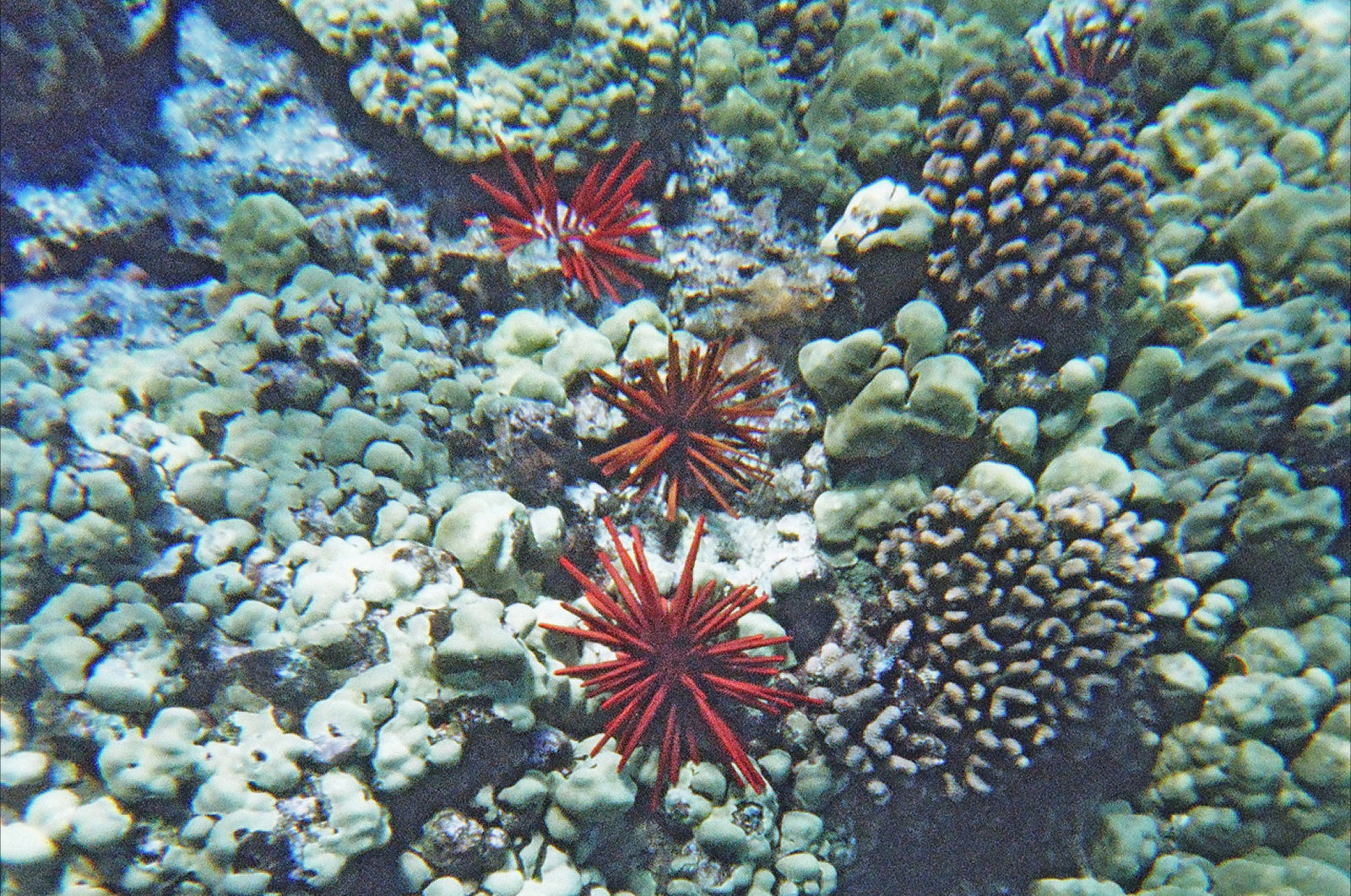
You will see lots of fish and beautiful coral at Molokini – maybe an eel or two. In whale season you can sometimes hear the whales singing when you’re under water. It’s probably the premier spot to snorkel in Maui.

Snorkeling at Turtle Town

After as much time as almost anyone could want in the water, your boat will leave Molokini. If your boat goes to “turtle town” it will head east to a point just north of Makena Landing on Maui.

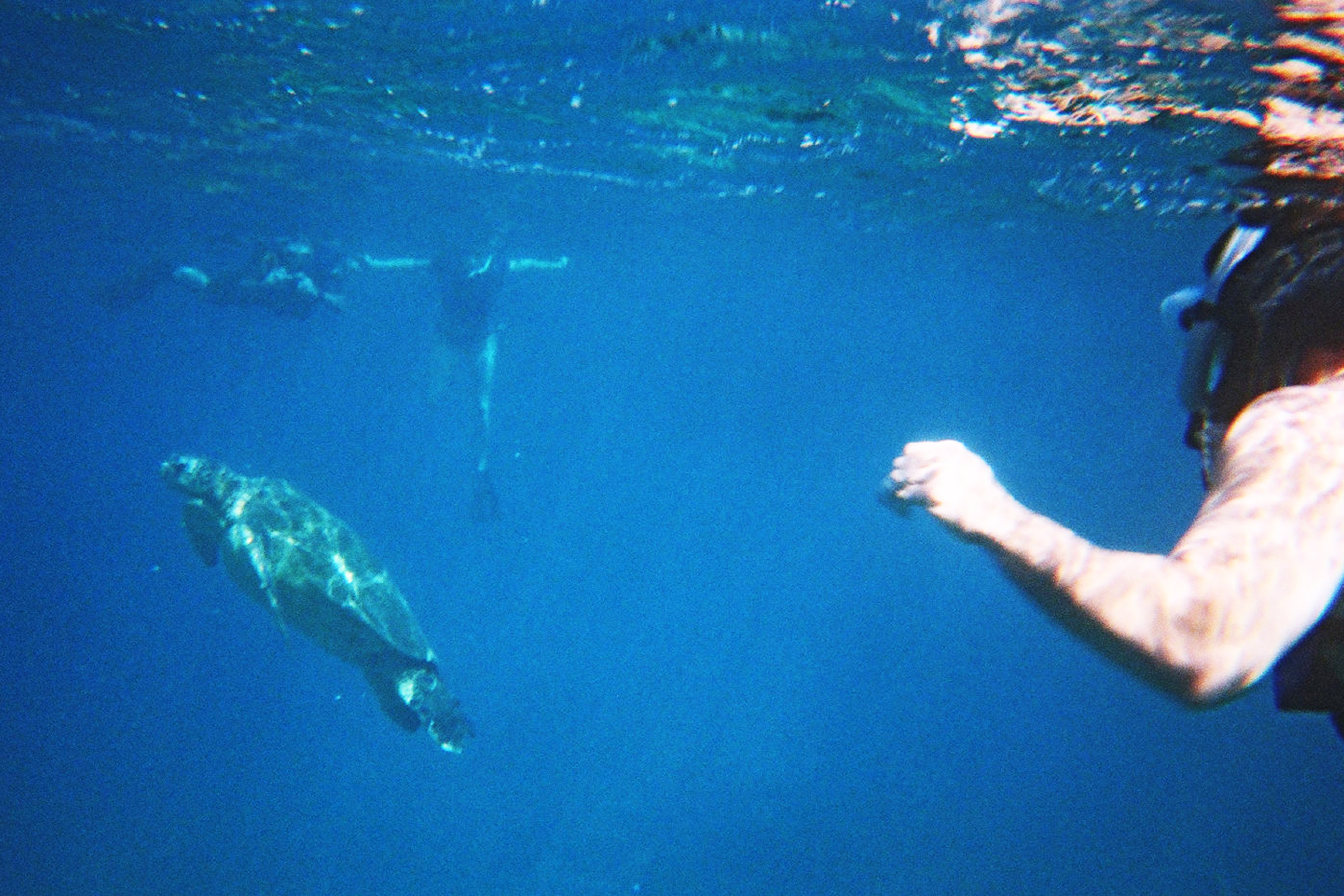
At “turtle town” there are two parallel lava tubes jutting out from the shore which support coral and form underwater caves. The turtles like to rest in these caves where they feel safe from the few predators that can do damage to a full grown turtle. While they can hold their breath for long periods of time, eventually these turtles have to breath. In this picture that Kathy took a large male is coming up for air. If you’re on the surface you can hear them hiss as they exhale. They’ll generally take a half dozen breaths or more before decending for another rest. It isn’t necessary to go to Molokini to have a great time snorkeling on Maui but, if you go, you won’t regret it.

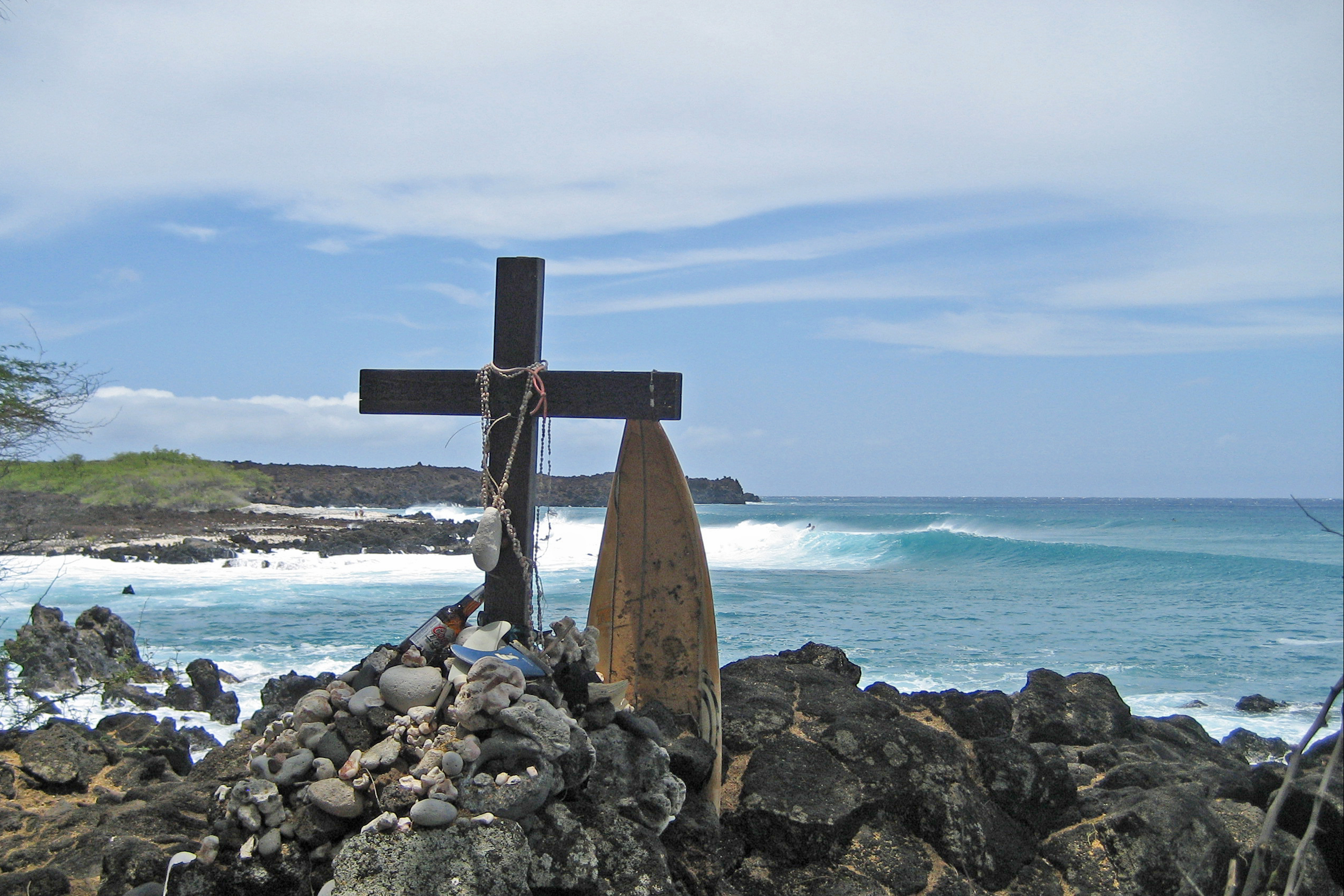
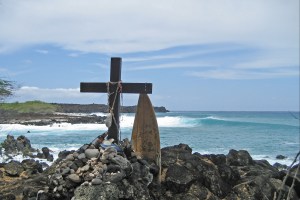
Surfer Memorial at La Perouse

Surfer Memorial at La Perouse

When the surf is running from the south, some of the serious surfers on Maui head to La Perouse. Unless you have a key to the gate for the private road, the closest you can get by car is the end of the road well past Big Beach. Some locals have a key. Others carry their boards along the trail described below.

To get to La Perouse, head south past Big Beach and into the Ahihi Kenau Reserve. A few hundred yards past Kanahena Cove (near the west end of the Reserve), the road narrows and the potholes proliferate. You’ll drive about a mile through a large lava field dating from 1790. Shortly after the lava stops you’ll see horse stables to your left and a monument just beyond. You can park here or drive the last hundred yards over an incredibly rough road and park by the ocean. It’s a beautiful spot and if you go no farther the trip is still worthwhile. If you’re very lucky, you may see dolphins resting in the shallows near the shore. Be sure to check out the cove around the bend to the right where you can see many beautiful fish from the shore. It’s private property so please respect the signs – but someone at La Perouse has a sweet spot on earth.

To see the Surfer Memorial you have to take a hike. Much of the trail is exposed and windy, so put on sunscreen, wear a hat with a chin strap and take some water. It’s about 3/4 mile to the memorial over uneven but more or less level terrain. It’s not a difficult hike.

The trail head is obvious – you’ll see it to the left as you face the water. The first part leads through the lava field where you’ll see a few cultural and historic sites (mainly the remains of enclosures made of lava). About two-thirds the way through the lava field is a fun blow hole – at least when the tide is high and the surf is up. (NOTE: blowholes can be dangerous. Keep a safe distance. A tourist was sucked into a bigger one on the north shore of Maui in 2011. His body was never found. A youngster could easily be sucked into this one – and maybe you.)
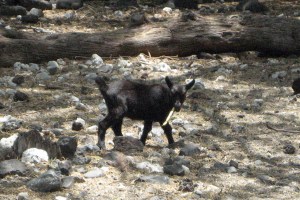
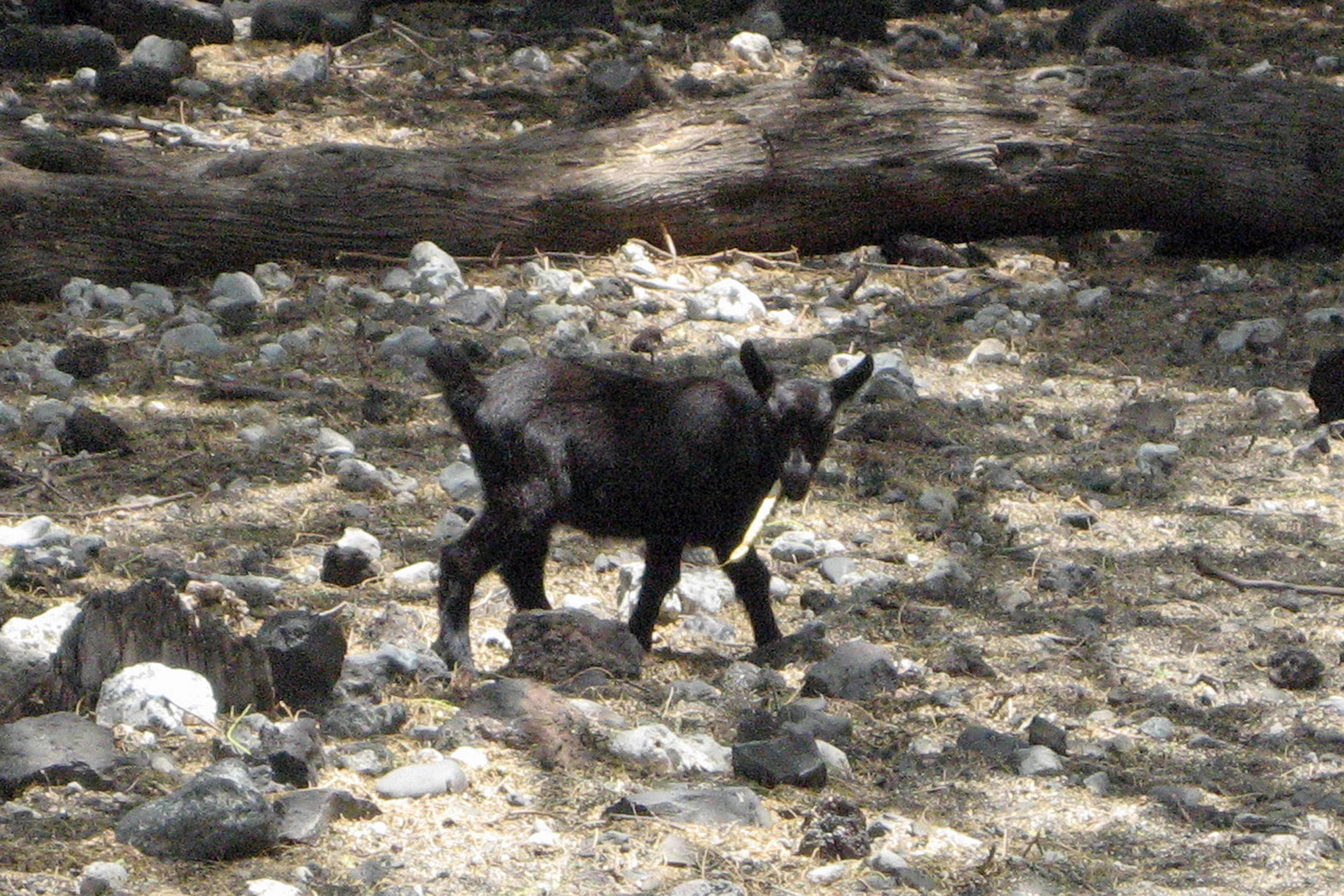
Not long after you leave the blowhole, the lava field is replaced by a small sandy beach. Beyond the beach the trail enters a welcome shady grove. Look for wild goats in this area. You can’t miss them – there are lots. The one in this picture seems to be chewing on a stick.

The Surfer Memorial is near the end of the grove – just off the trail toward the ocean. If the surf’s up, you may see surfers in the background. Quite a striking sight.  In fact, if you click on the picture at the top of this post and enlarge it, you’ll see a surfer paddling out to catch a wave.

In our picture of the memorial we show only one cross and broken board. When you get there, you’ll see two. It’s a great sport, but some of the surfers don’t come home.

Interested in other hikes on Maui? Check out our posts on Mount Haleakala hikes:  The Sliding Sands Trail and The Halemauu Trail. To read more about hiking La Perouse Bay, click here.

UPDATE June 5, 2012: on a recent hike of La Perouse trail we discovered that both broken surfboards were gone. There were pieces of one laying beside the memorial but the other was nowhere in sight.